
Water deeper than the sock
A sock is open at the top. Step into water higher than the cuff and it fills, the same as any sock. The only thing that changes where that line sits is how tall the sock is.
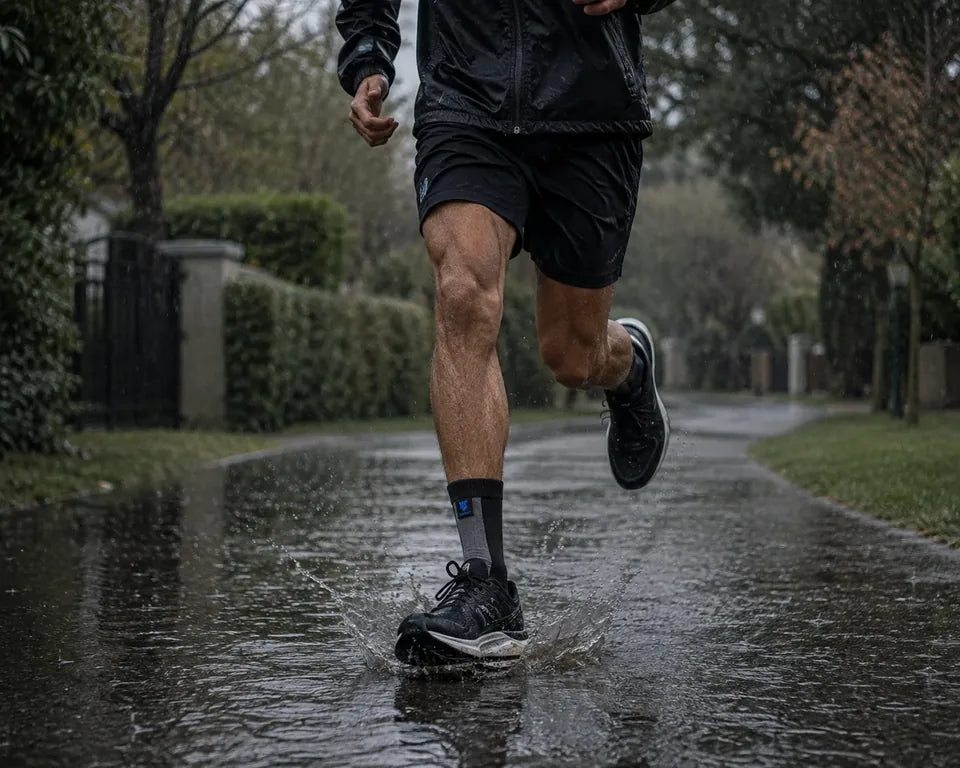
Waterproof socks
A waterproof layer sealed inside a knitted sock. Your boots can soak through and your feet stay dry. Hiking, work, cycling, running and wudu.
The basics
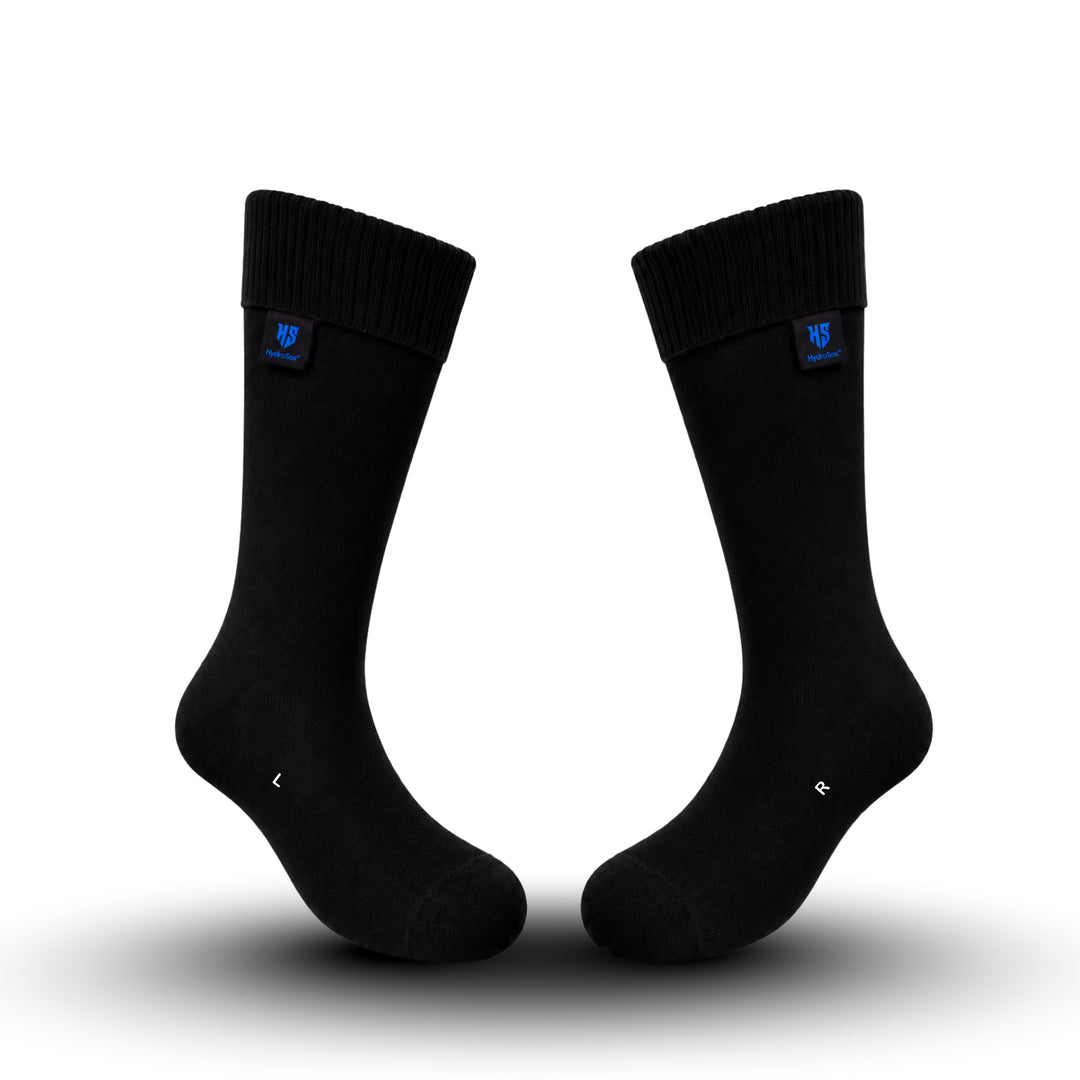
A waterproof sock looks like an ordinary sock and has a thin waterproof layer sealed between two knitted layers. The knit gives it the fit and feel of a sock. The layer in the middle stops water reaching your foot, while still letting sweat escape as vapour.
Worn inside a boot or a shoe, it keeps your feet dry at the point your footwear can’t any more — four hours into a wet walk, or on the ride home in shoes that never dried out.
How they work
One waterproof layer on its own would be uncomfortable and wouldn’t last. The other two are there to make it wearable.
Scroll to take it apart.
Against the skin
A knitted layer against your skin. It moves sweat away from the foot and stops the waterproof layer sitting directly against you — which is what makes it feel like a sock rather than a bag.
The limits
Nobody in this category writes this bit down. It’s also the part that decides whether waterproof socks are right for you, so it goes above the price rather than below it.
A sock is open at the top. Step into water higher than the cuff and it fills, the same as any sock. The only thing that changes where that line sits is how tall the sock is.
Breathability is real and it has a limit. Work hard enough for long enough and your foot produces vapour faster than the layer can move it. You end up damp from the inside instead of the outside.
Once it’s pierced — by a toenail, a thorn, a sharp stone inside a boot — the waterproofing is gone and can’t be put back. No wash, spray or reproofing treatment brings it back.
By use
The sock doesn’t change. What changes is which of these sounds like your week.
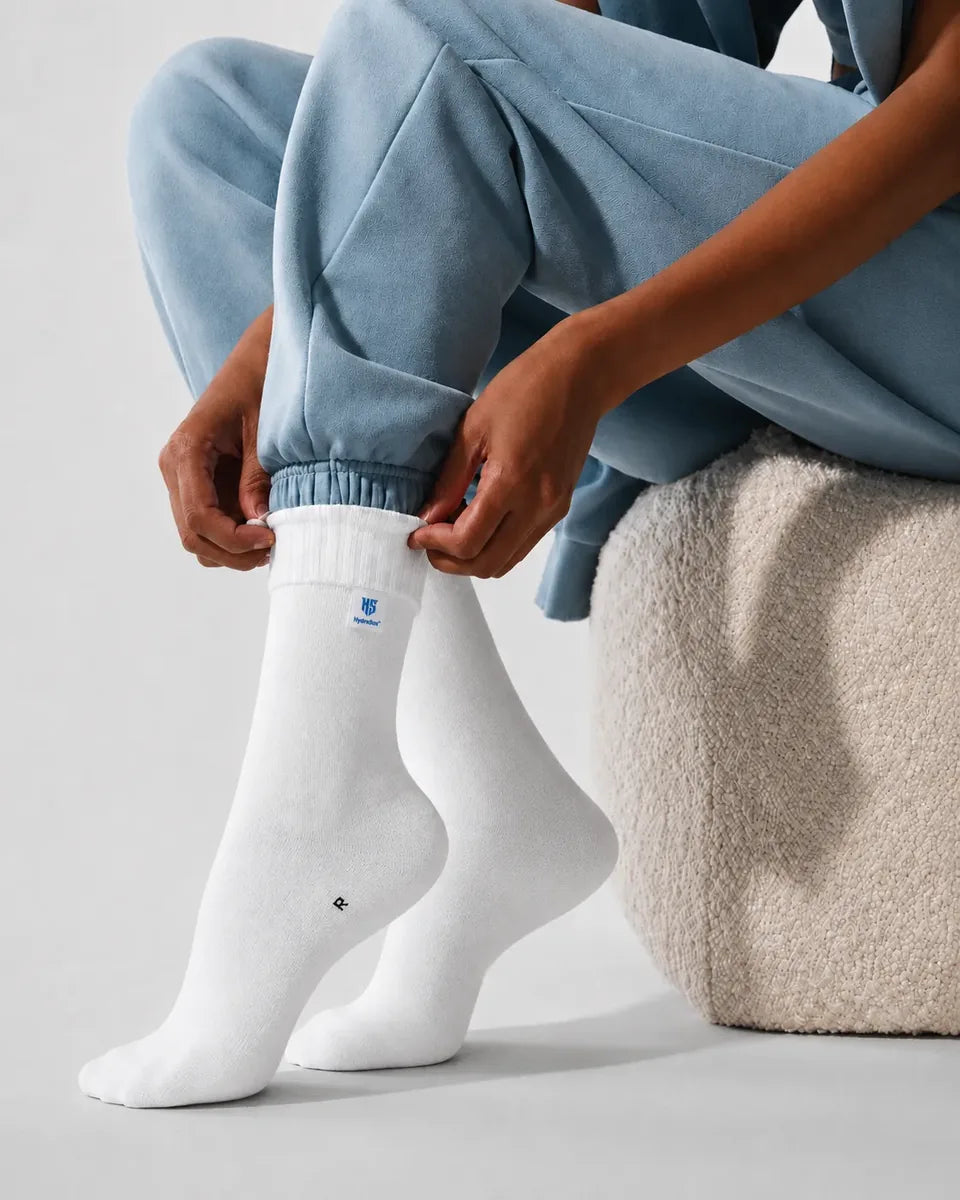
Making wudu five times a day, often somewhere that wasn’t built for it. Waterproof wudu socks are how most people find this site.
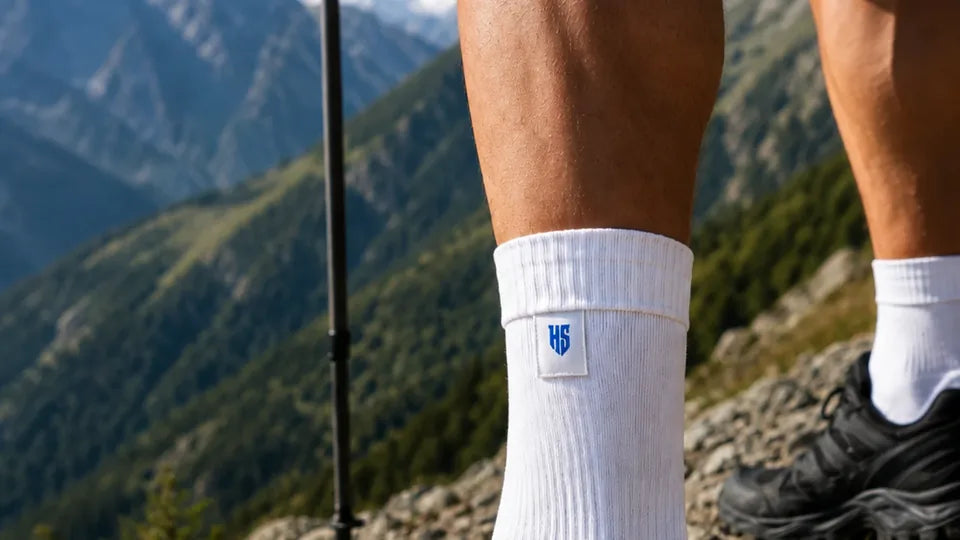
Waterproof walking socks for the point, usually four hours in, where a boot has soaked through and there’s nowhere on a hill to dry anything.
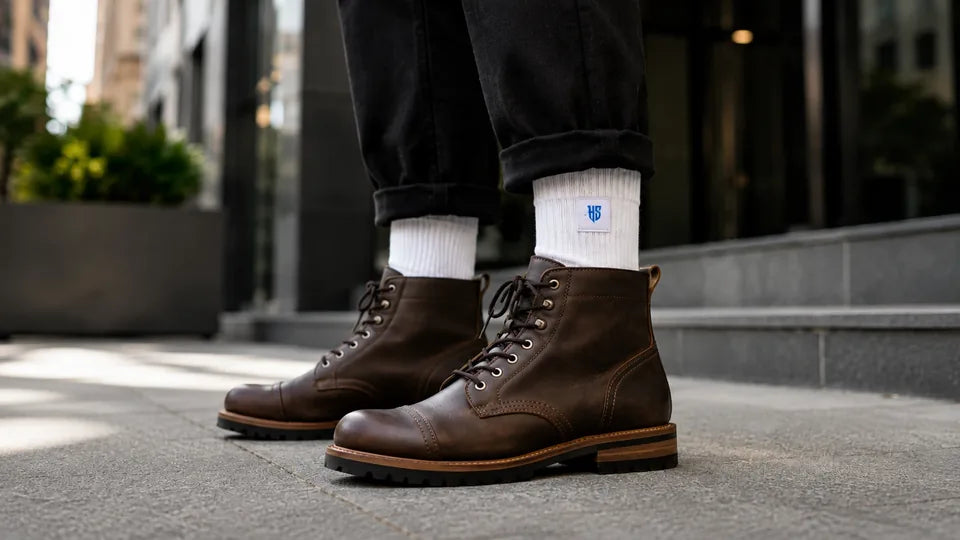
Waterproof work socks for a ten-hour shift where the boot keeps the rain out and then keeps everything your foot produces in.
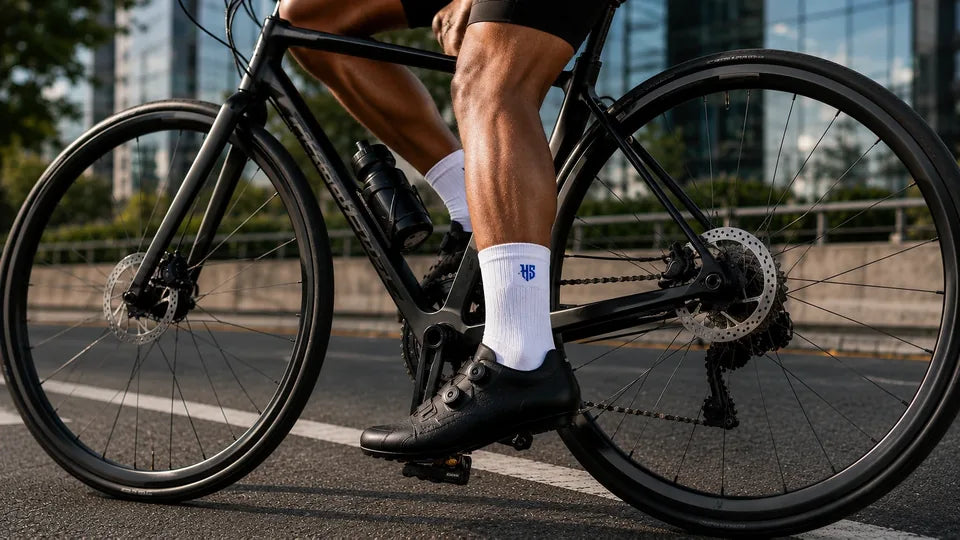
Waterproof cycling socks for road spray, and for shoes that are still wet at home time because nothing dried at the office.
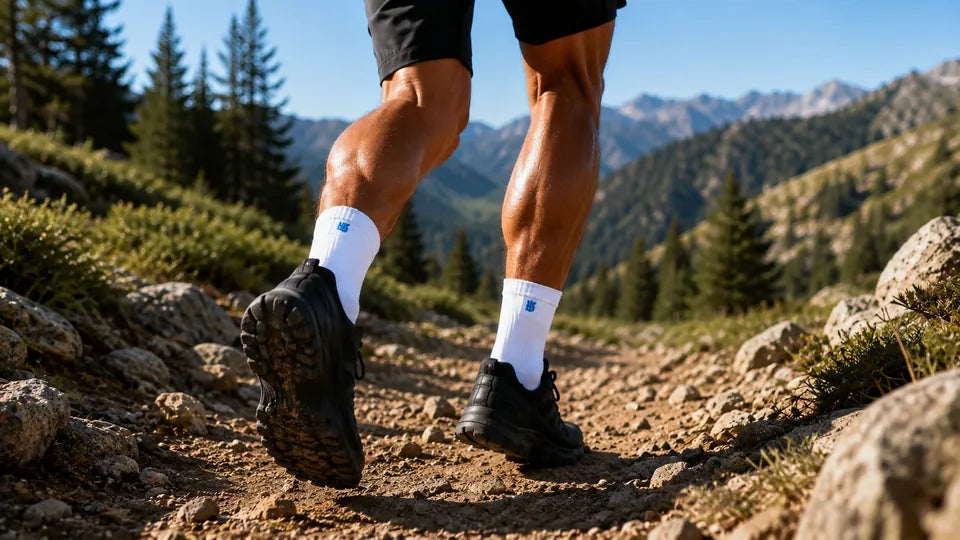
Waterproof running socks for cold winter miles and wet races — with the honest caveat about weight and warm weather on that page.
The alternatives
Most people reading this are choosing between four things rather than four brands. Here’s where each one wins.
| The option | Good when | Not so good when |
|---|---|---|
| Ordinary socks and waterproof boots | Good when The ground is wet but shallow and the day is short enough that the boot doesn’t soak through. | Not so good when The boot soaks through, or water comes over the top of it. |
| Waterproof socks with any footwear | Good when The footwear is going to get wet and you’ve accepted that, but your foot mustn’t. Lets you wear lighter or cheaper shoes. | Not so good when Water goes over the top of the sock, or you’re working hard enough to out-sweat it. |
| Overshoes, for cycling | Good when You want to keep the shoe itself dry and block wind as well as water. | Not so good when They leak at the ankle, wear through at the heel, and are awkward to put on in the dark. |
| Both together | Good when Genuinely cold, genuinely wet, genuinely long. The most effective and most expensive option. | Not so good when Anything milder — you’ll overheat. |
Whoever you end up buying from, these four questions separate a waterproof sock that works from one with the word printed on the label.
An unnamed “waterproof laminate” is a claim with nobody behind it. A named one is made by a company that has to stand behind it. Ours is Porelle®.
Three is the standard build: lining, waterproof layer, outer knit. If a listing doesn’t say, it’s usually because the answer is two.
Shoe sizes aren’t consistent between brands. Foot length is. A brand that publishes foot-length measurements has thought about fit.
This is the one that sorts the category. Every waterproof sock has the same three limits. Very few sellers print them.
Order
One price, whichever page you came in on.
If your feet get wet on a regular basis — a job, a commute, a weekly walk, daily wudu — then yes, because the problem keeps coming back. For one wet holiday a year, probably not.
A waterproof sock has a sealed layer inside it and stops water. A water-resistant sock has a treated or tightly knitted surface that shrugs off light rain for a while and then wets through. If a product doesn’t name a waterproof layer, it’s usually the second kind.
Warmer than the same sock without the layer, because they block wind and stop your foot cooling as water evaporates. But they aren’t insulated. Waterproof and warm are two different things worth choosing separately.
Yes. Wash them cool and air dry them between wears. Most people who wear them daily keep two or three pairs so there’s always a dry one ready.
They’re breathable, not ventilated. The layer passes sweat outwards as vapour, which delays the point where your foot feels damp. On a hard, sustained effort you’ll produce more than it can move. That’s physics, not a fault.
They keep melted snow out well and they block wind, which is most of what makes feet cold. They aren’t insulated though, so in properly cold weather you want them for the dryness rather than the warmth.
No. They’re built for water arriving from outside during normal use — rain, spray, puddles, wet ground — not for being under water. We’d rather say so than take the sale.
Judge them on four things you can actually check: is the waterproof layer named, is the number of layers published, is sizing based on foot length, and does the seller say what the socks won’t do. Most listings fail at least two.
Two decisions and a quantity. No account needed.
Cart
Your cart is empty.